
Your Quick-Start Guide to Post-Storm Exterior Checks in Concord NH: Do This First | T-Build Handyman Services
- TJ Talbot
- Feb 26
- 5 min read

A single New Hampshire storm creates hidden damage that destroys your home from the inside out. Heavy snow, high winds, and freezing rain punish the exterior of your property in Concord and Chichester. Ignoring small signs of wear leads to structural rot: mold growth: expensive foundation repairs. You must identify these issues now before the next front moves through the Merrimack Valley.
The freeze-thaw cycle in late February acts as a crowbar on your siding and roofing. Water enters a tiny crack: freezes: expands: rips the material apart. This process repeats every night until a small leak becomes a flooded living room. Your home is your most significant investment and requires immediate protection after every major weather event.
Waiting for a visible drip from the ceiling is a dangerous mistake. By the time water reaches your drywall, the insulation is already ruined and wood rot has started. You need to act with a mission-first attitude to secure your perimeter. This guide provides the tactical steps to evaluate your home and protect your family.
The Immediate Danger Zone
Safety is your primary objective during any post-storm assessment. Downed power lines: standing water: unstable trees: these hazards kill homeowners every year. Never approach a wire resting on the ground or tangled in branches. Assume every line is live and deadly.
Check your surroundings for hanging limbs that could fall at any moment. High winds in Epsom and Pittsfield often weaken large oaks and pines without knocking them over completely. These "widow-makers" represent a constant threat to your roof and your safety. Stay clear of any structure that appears shifted or leaning after a heavy snow load.
Avoid walking on a wet or icy roof under any circumstances. Steep pitches and slick shingles lead to catastrophic falls. You can perform a highly effective inspection from the safety of the ground using binoculars. Professional tools and experience are required for anything involving a ladder in winter conditions.
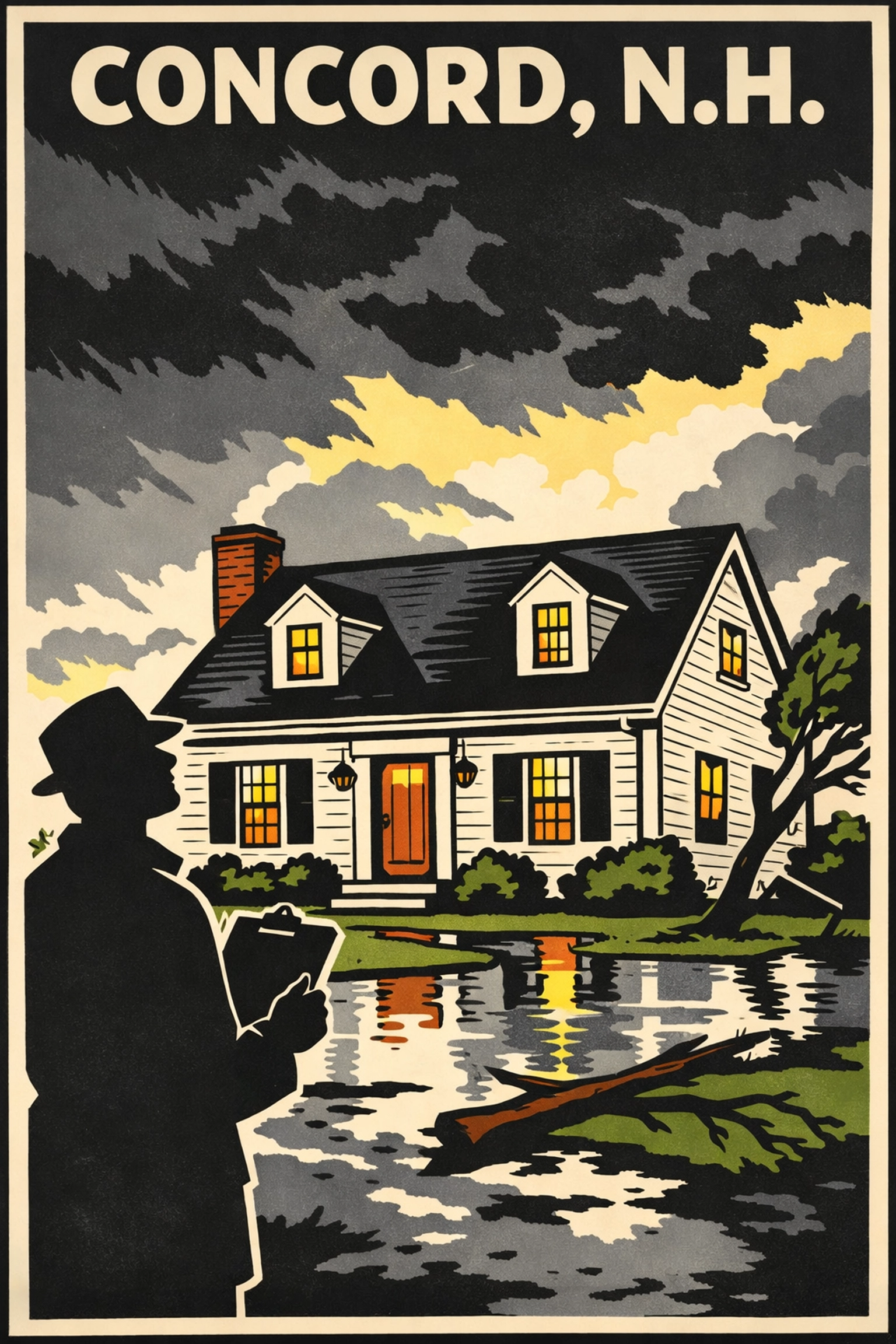
Tactical Roof Inspection Checklist
Your roof is the first line of defense against the elements. Storms strip away protection and leave your decking vulnerable to the sun and rain. Check these specific areas immediately after the wind dies down.
: Scan for missing shingles : Identify shifted or torn tabs : Check for cracked flashing : Look for gutter granules : Spot dented metal vents : Inspect chimney masonry gaps
Granules in your downspouts indicate your shingles are reaching the end of their life. Wind-driven rain forces water under loose tabs and rots the plywood underneath. If you see dark spots on your siding or interior ceilings, the breach has already occurred. You must address these vulnerabilities now to prevent a total roof failure.
In areas like Barrington and Strafford, ice dams are a recurring nightmare. Check your eaves for massive icicles or heavy ice buildup that prevents drainage. This trapped water backs up under your shingles and creates a direct path into your attic. Rapid intervention is the only way to stop the cycle of damage.
Siding and Exterior Wall Vulnerabilities
Your siding does more than provide curb appeal. It creates a thermal envelope and a moisture barrier for your framing. High-velocity winds turn debris into projectiles that pierce vinyl and crack wood. Even a small hole allows pests and moisture to enter your wall cavities.
: Locate cracks in vinyl : Find dented aluminum panels : Check for loose clapboards : Inspect warped siding sections : Look for missing J-channel : Identify holes from debris
Moisture trapped behind siding leads to "stealth rot" that remains invisible for years. You will eventually face thousands of dollars in repairs once the studs begin to soften. Check the North-facing side of your home in Lee and Nottingham specifically. These areas stay damp longer and are prone to rapid deterioration after a storm.
Gaps in your siding joints act as a vacuum for wind-driven rain. If you notice panels that feel "spongy" or move excessively when pressed, the fasteners have likely failed. Secure these sections now to prevent the wind from stripping the entire wall bare during the next storm.
Windows, Doors, and the Perimeter Seal
Windows and doors are the weakest points in your home's exterior shell. Storm pressure can blow out seals and warp frames in an instant. This leads to massive heat loss and high utility bills in the cold New Hampshire winter.
: Check for cracked glass : Identify fogged double panes : Test for sticking frames : Inspect torn weather stripping : Look for damaged caulking : Check door threshold gaps
A door that suddenly sticks is often a sign of structural shifting or moisture swelling. Don't force it: fix the underlying cause. Drafty windows in Raymond and Candia waste hundreds of dollars in heating costs every season. Replacing failed caulk is a simple task that prevents major water intrusion.
Examine the seals around your dryer vents, hose bibs, and electrical entries. These penetrations are common failure points where water enters the home. Use high-quality exterior sealant to close any gaps larger than a nickel. This prevents cold air from entering and pests from seeking warmth inside your walls.
Gutter and Drainage Failures
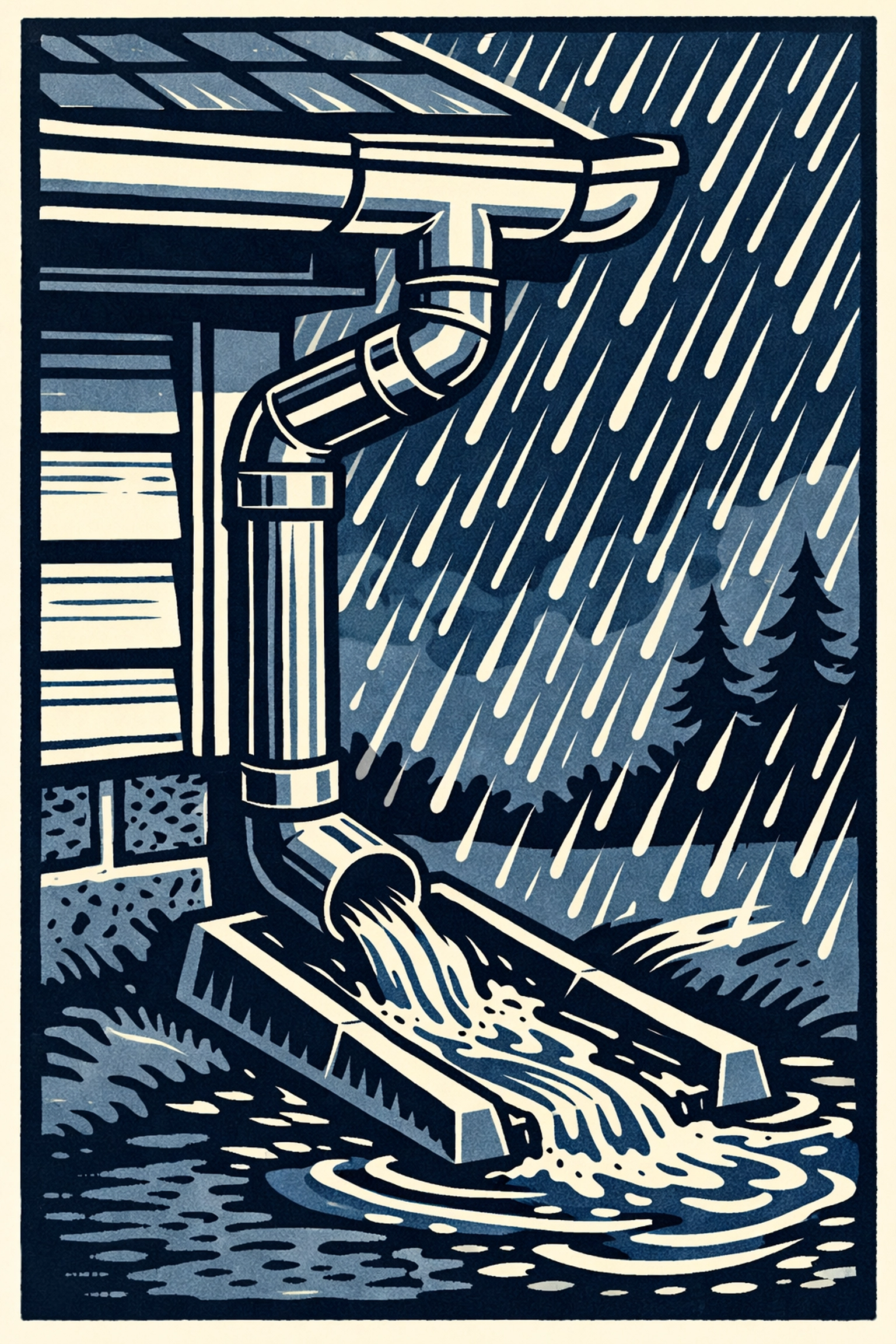
Gutters are designed to move thousands of gallons of water away from your foundation. A storm-damaged gutter system dumps that water directly against your basement walls. This leads to flooded basements: cracked foundations: unstable soil.
: Clear heavy debris buildup : Check for sagging hangers : Inspect disconnected downspouts : Look for leaking seams : Test for proper pitch : Ensure splash block placement
Ice expansion often pulls gutter spikes right out of the fascia board. If you see a gap between your gutter and the roofline, water is rotting your rafter tails. This repair is much more expensive than simply re-securing the gutter system. Ensure your downspouts extend at least six feet away from your home in Epping and Concord.
The Value of Professional Documentation
Insurance companies require proof of damage to process claims effectively. Take wide-angle photos of your entire property from the street. Then: take close-up shots of every dent, crack, and missing shingle you found during your check. Note the date and the specific storm that caused the issue.
Professional inspections provide the "expert weight" needed for difficult claims. T-Build Handyman Services brings a veteran-owned, mission-first perspective to every inspection. We see the things that untrained eyes miss: the subtle signs of long-term failure. With over 13 years of experience, we know exactly how New Hampshire weather attacks a home.
Inaction is your greatest risk after a storm. The "wait and see" approach always results in higher costs and more stress. Secure your home's perimeter now to ensure your family stays safe and dry through the rest of the winter. Protective measures today are the only way to avoid a construction disaster tomorrow.

Secure Your Home Today
Do not let a small storm repair turn into a total home renovation. T-Build Handyman Services specializes in exterior maintenance and rapid repair for homeowners in the Concord area. We treat every job like a mission: precision: durability: accountability.
Whether you need a quick shingle replacement or a full gutter overhaul, we are ready to serve. We understand the local climate and the specific challenges of New England architecture. Our 13+ years of experience ensures your home is handled with professional care.
Call or text T-Build Handyman Services at (603) 706-0560 to book your post-storm inspection. You can also email us at TBuildHandyman@gmail.com for a detailed estimate. Visit our Google Business Profile to see our latest projects and reviews from your neighbors.
Protect your investment and your peace of mind now.
T-Build Handyman Services Call/Text: (603) 706-0560 Email: TBuildHandyman@gmail.com
Comments