
Gutters Sagging or Overflowing? Winter Damage Signs Every Raymond and Lee Homeowner Should Know
- TJ Talbot
- Feb 24
- 5 min read

Winter gutters that sag or overflow are not cosmetic problems. They are structural warning signs that demand immediate attention before the next freeze-thaw cycle hits Raymond and Lee.
Your gutter system protects your foundation, siding, and roof from water damage. When it fails during winter, the consequences multiply fast. Ice adds weight. Freezing temperatures create expansion. Snowmelt has nowhere to go. The result is thousands of dollars in damage that starts small and spreads quickly.
February is the final window to address these issues before spring thaw accelerates the damage already done.
When Gutters Sag or Pull Away From Your Home
A sagging gutter section is your system buckling under excessive weight. Ice accumulation, packed snow, and trapped debris combine to create loads your brackets and fasteners were never designed to handle. In Raymond and Lee, where freeze-thaw cycles happen repeatedly throughout winter, this problem compounds daily.
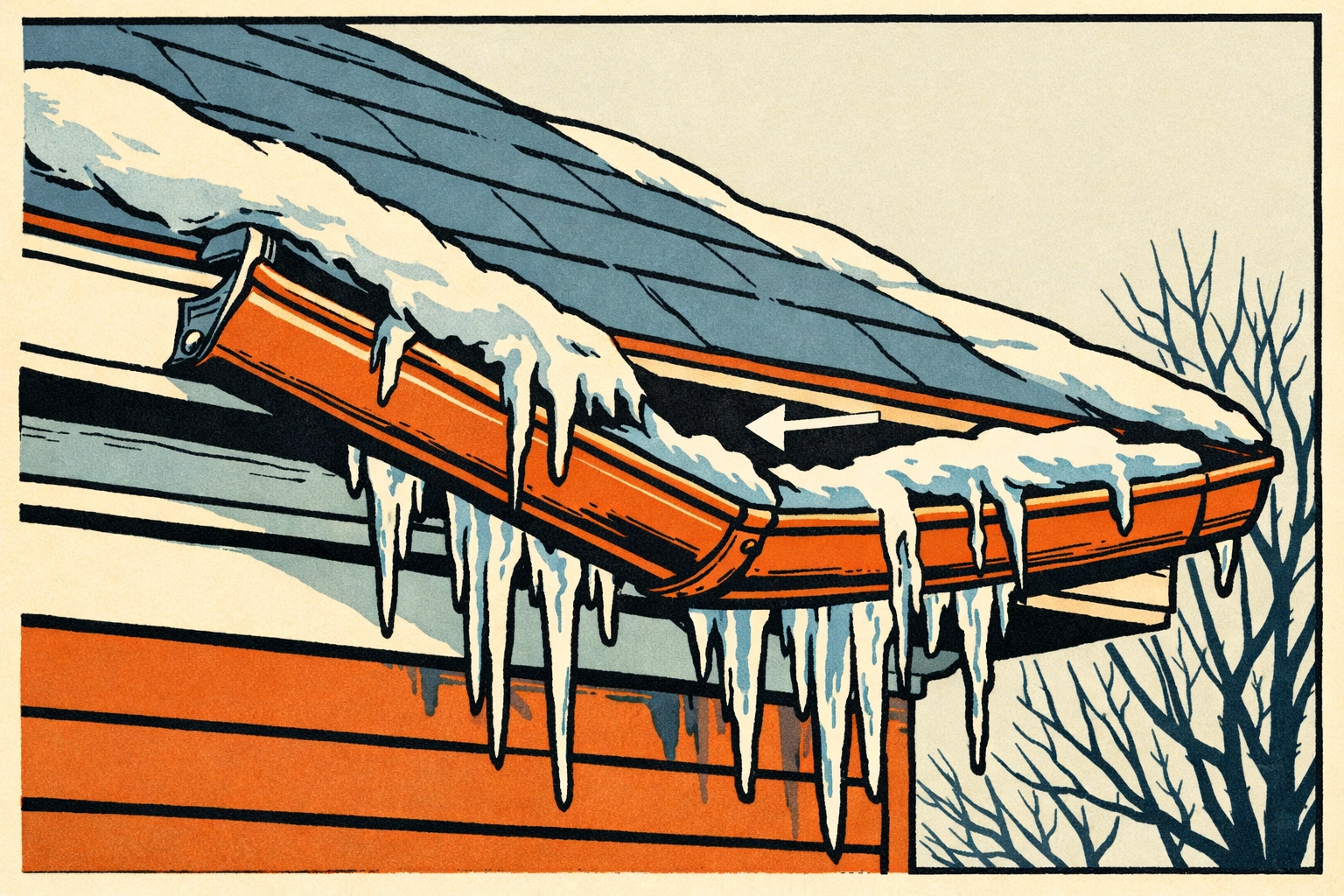
When temperatures drop below freezing, water trapped in your gutters expands. This expansion loosens the screws and brackets holding your gutters to the fascia board. When temperatures rise, the ice melts, the gutter shifts, and the next freeze locks it into a new, misaligned position. Each cycle makes the problem worse.
Visible gaps between your gutter and roofline indicate imminent failure. Water now bypasses the trough entirely and flows directly down your exterior walls. Wood fascia boards absorb this moisture. Rot begins. Mold follows. Eventually, the entire gutter section tears away from the house, often taking damaged fascia with it.
Foundation damage happens next. When gutters fail, water pours down at concentrated points rather than being directed away through downspouts. This creates pooling at your foundation perimeter. The ground saturates. Water finds cracks. Basements flood. Crawlspaces turn into swamps.
A single sagging section can cost you a new fascia board, rotted sheathing repair, foundation crack sealing, and complete gutter replacement. That expense multiplies if you wait until spring when water volume increases dramatically during snowmelt.
Overflowing Water Signals a System Blockage
Water spilling over the sides of your gutters means debris, ice, or both have created a dam somewhere in your system. Autumn leaves that never got cleared out sit at the bottom of your troughs. Snow falls on top. Temperatures fluctuate. Everything freezes together into a solid mass that blocks water flow completely.
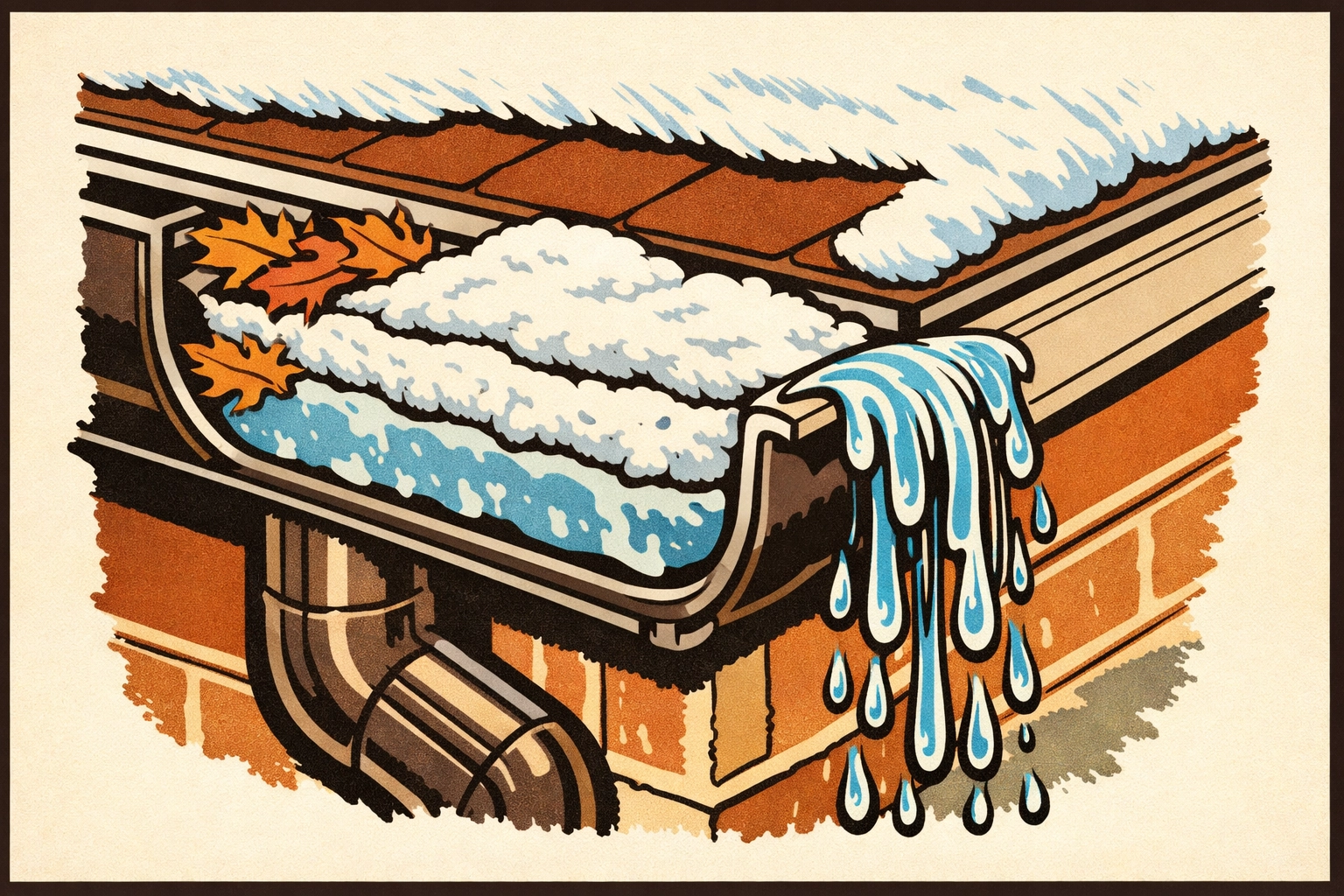
When snowmelt or winter rain has nowhere to go, it takes the path of least resistance: straight over the gutter edge. This overflow erodes landscaping, undermines walkways, and pools against your foundation just like failed gutters do. The difference is that overflowing gutters often still look structurally sound from the ground, so homeowners ignore them longer.
Ice dams form when clogged gutters prevent proper drainage. Snow on your roof melts from interior heat loss. That water flows down to the roof edge, where it meets the backed-up gutter system. With nowhere to drain, it refreezes. The dam grows. Water backs up under shingles. Attic insulation gets soaked. Ceilings stain. Interior walls develop water damage.
Downspout blockages create the same overflow problem but are harder to diagnose. A downspout packed solid with ice cannot drain water no matter how clear your gutters appear. Water backs up into the trough, reaches capacity, and overflows. Clearing the gutter does nothing because the real blockage sits lower in the system.
February temperatures in Raymond and Lee swing enough to create repeated melt-freeze cycles. Each cycle adds to the blockage. Each overflow event moves more soil away from your foundation. Each ice buildup adds more weight to already-stressed gutter brackets.
Additional Winter Damage Indicators
Large icicles hanging from your gutters look seasonal but signal drainage failure. They form when water cannot exit the system properly and instead freezes along the gutter edge. Their weight pulls gutters away from fascia boards. When they fall, they tear gutter sections with them or damage property below.
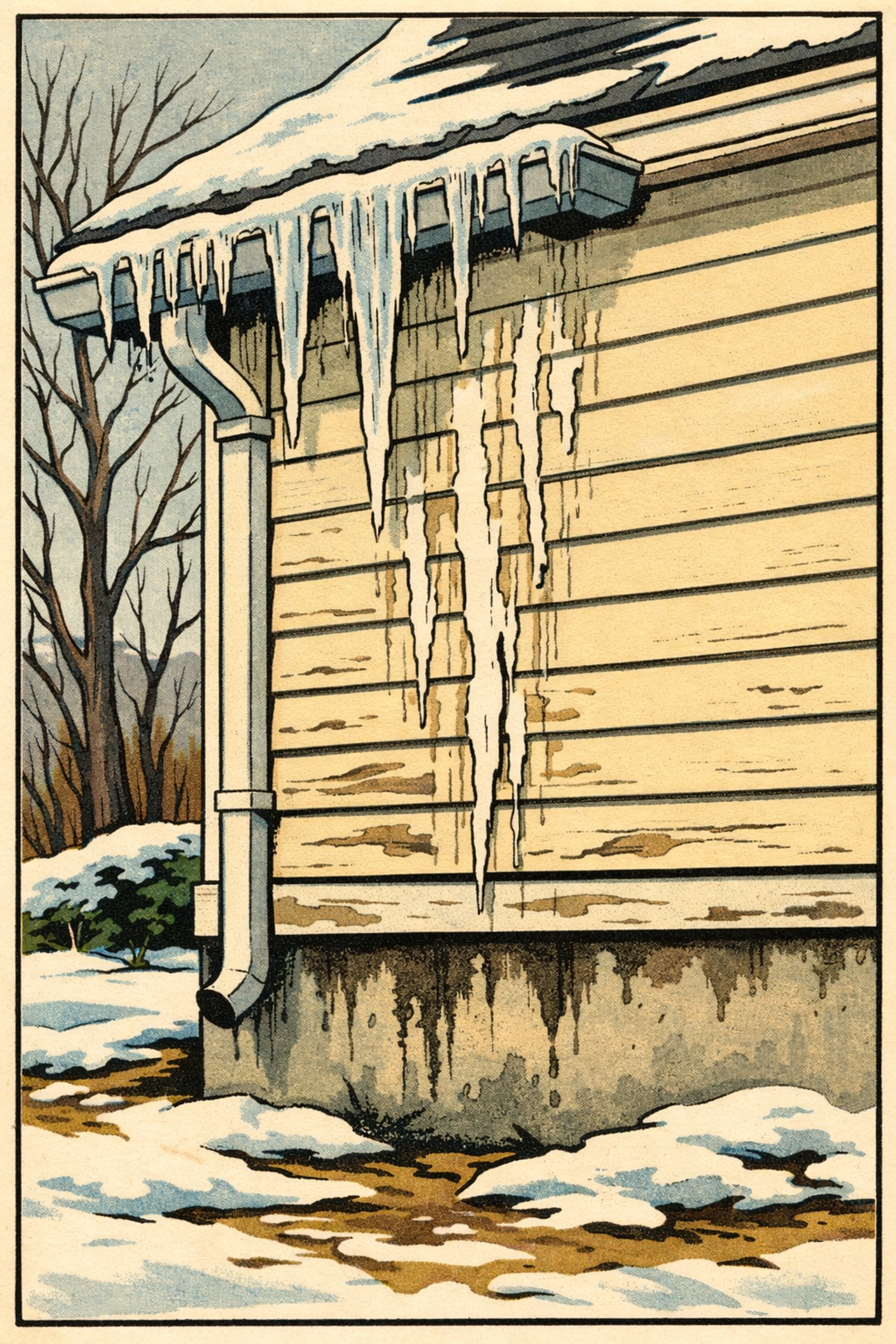
Peeling paint or vertical streaks on your siding near gutter lines indicate water is escaping during thaw periods. That water penetrates behind siding panels, soaks into sheathing, and creates conditions for mold growth you cannot see until you open the wall. By then, the repair involves replacing water-damaged framing, not just cleaning a gutter.
Cracks in gutter sections: particularly at seams or corners: allow water to leak out before it reaches downspouts. Vinyl gutters crack in extreme cold. Aluminum gutters develop stress fractures at connection points. These cracks start small but expand each time water freezes inside them. What begins as a hairline split becomes a gaping hole by March.
Staining on foundation walls directly below gutter lines confirms water is bypassing your drainage system entirely. This staining represents hundreds of gallons of water soaking into the ground at your foundation perimeter. Frozen ground cannot absorb that water, so it sits against your foundation until it finds a way inside.
What Raymond and Lee Homeowners Should Check Now
Walk your property and inspect for these specific issues:
: Sagging gutter sections or visible gaps between gutters and roofline : Water stains or icicles along gutter edges : Overflow marks on siding or foundation walls : Cracks or splits at gutter seams and corners : Downspouts that appear blocked or frozen solid : Peeling paint near gutter attachment points
Testing your system is simple. During the next thaw, watch where water flows when temperatures rise above freezing. Water should exit through downspouts and drain away from your foundation. If it overflows, pools, or cascades down siding, you have a failure that needs professional attention.
Get Professional Gutter Inspection and Repair
T-Build Handyman Services LLC brings a mission-first approach to every gutter inspection and repair in Raymond and Lee. As a veteran-owned business, we assess problems systematically, prioritize repairs based on urgency, and complete work efficiently so your home is protected before the next weather event.
To get on the schedule, call, text, or email T-Build Handyman Services LLC. Call or text us, or send an email with your address and a description of what you are seeing. We will respond promptly to discuss your specific situation and timeline.
February weather in our area remains unpredictable. Another cold snap will worsen existing damage. Spring snowmelt will overwhelm already-compromised systems. The time to act is now, while professionals still have availability and before emergency repairs cost significantly more than planned maintenance.
Your gutters are not decorative. They are structural protection for your foundation, framing, and interior spaces. When they fail, the damage spreads quickly and expensively. A sagging section today becomes a rotted fascia board tomorrow and a foundation crack next month.
Contact T-Build Handyman Services LLC now to schedule your gutter inspection. We serve Raymond, Lee, and the surrounding communities with the same attention to detail and commitment to quality that defined our military service. Your home deserves that level of protection.
Comments